Sapphire is an excellent optical material — but even the best material can underperform if the window is not properly specified.
Here are 5 common mistakes we see when designing custom sapphire windows:
1. Over-specifying optical quality
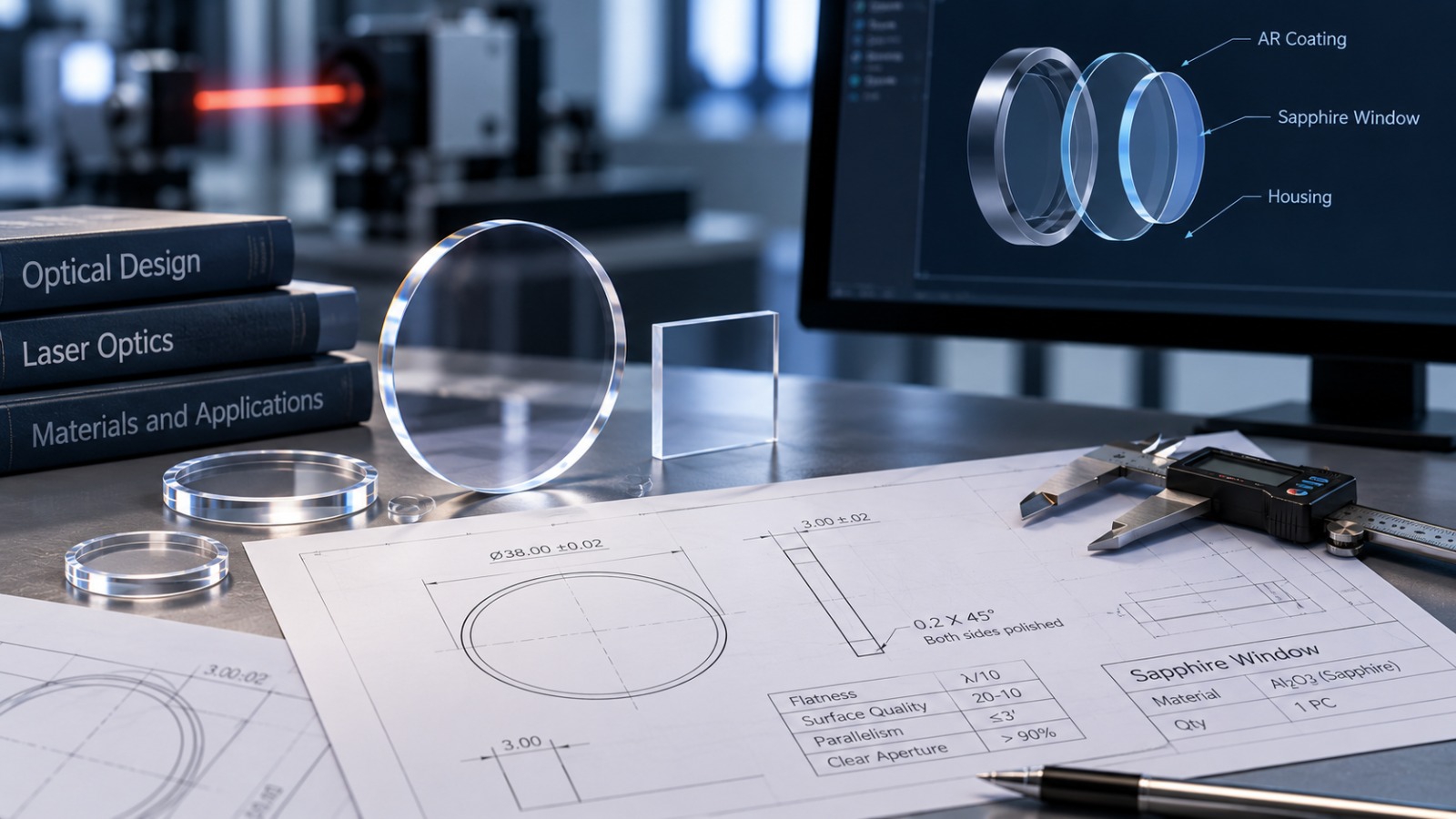
λ/10 flatness or 20-10 surface quality can be valuable for precision optics, but not every protective window needs them. Tighter specifications mean higher manufacturing cost.
2. Choosing thickness without considering the application
Diameter, clear aperture, pressure, mounting method, and mechanical load should all be considered together.
3. Ignoring the mounting design
Excessive clamping force or poor edge support can introduce stress and increase the risk of failure.
4. Specifying AR coating without enough information
Wavelength range, AOI, required transmission/reflection, and laser power should be defined before coating design.
5. Waiting too long to consider manufacturability
Small design changes in tolerances, chamfers, step geometry, or surface specifications can sometimes significantly improve manufacturability and cost.
A good sapphire window isn't simply a piece of sapphire made to a drawing.
Material, optical specifications, mechanical design, coating, and manufacturing process should work together.
Working on a custom sapphire window? Send us your drawing or specifications — we'd be happy to review the requirements and discuss a practical manufacturing solution.